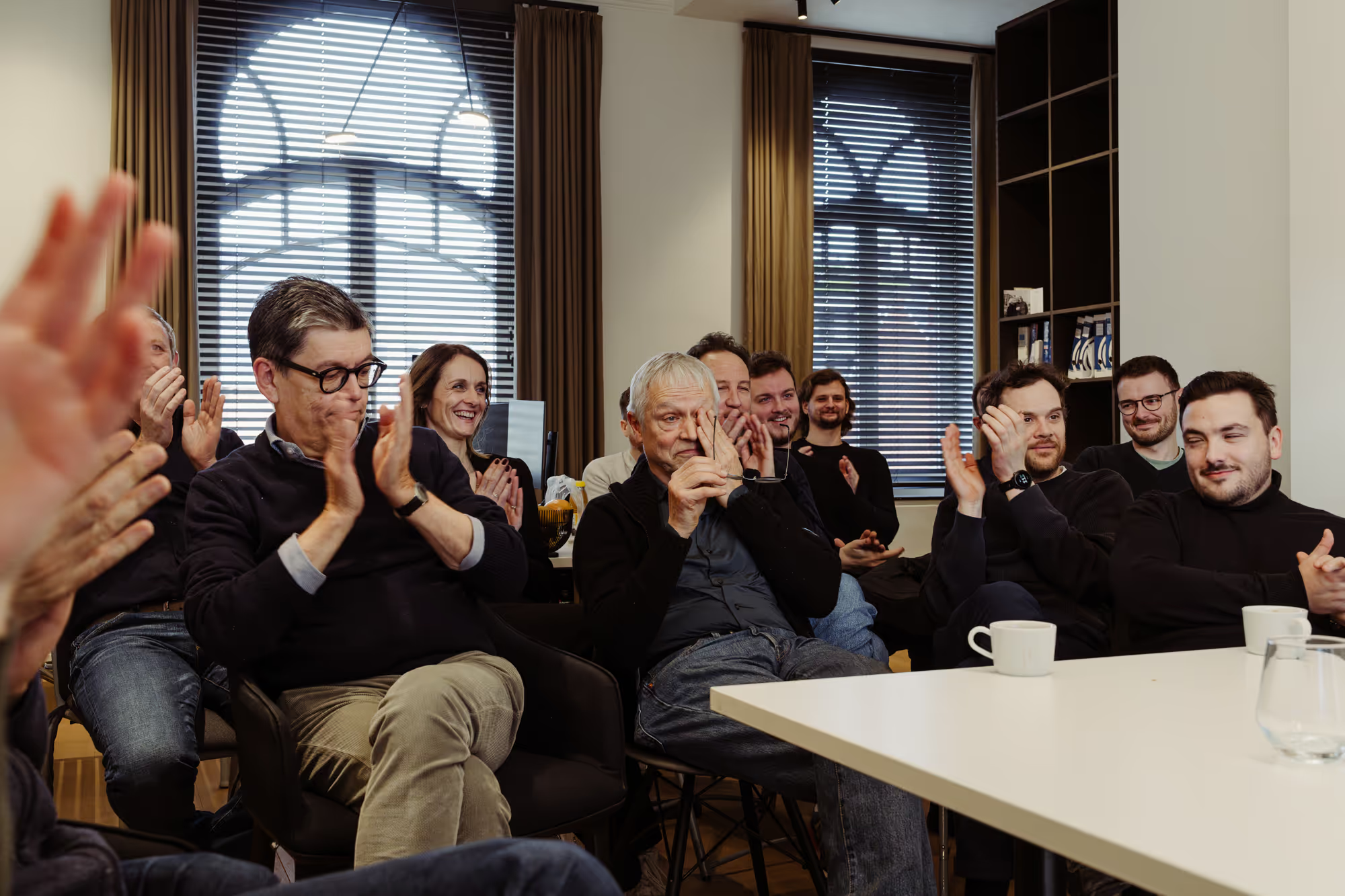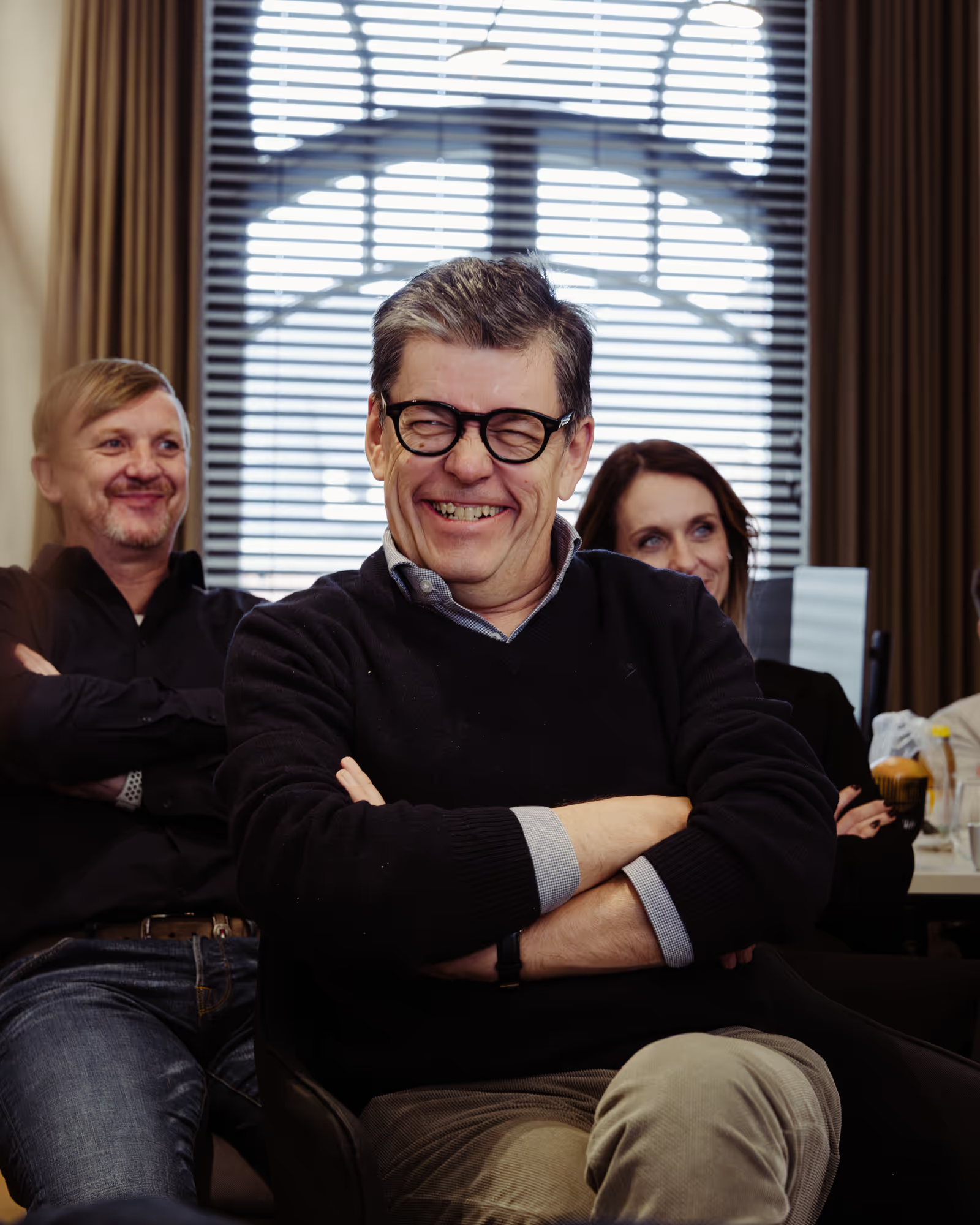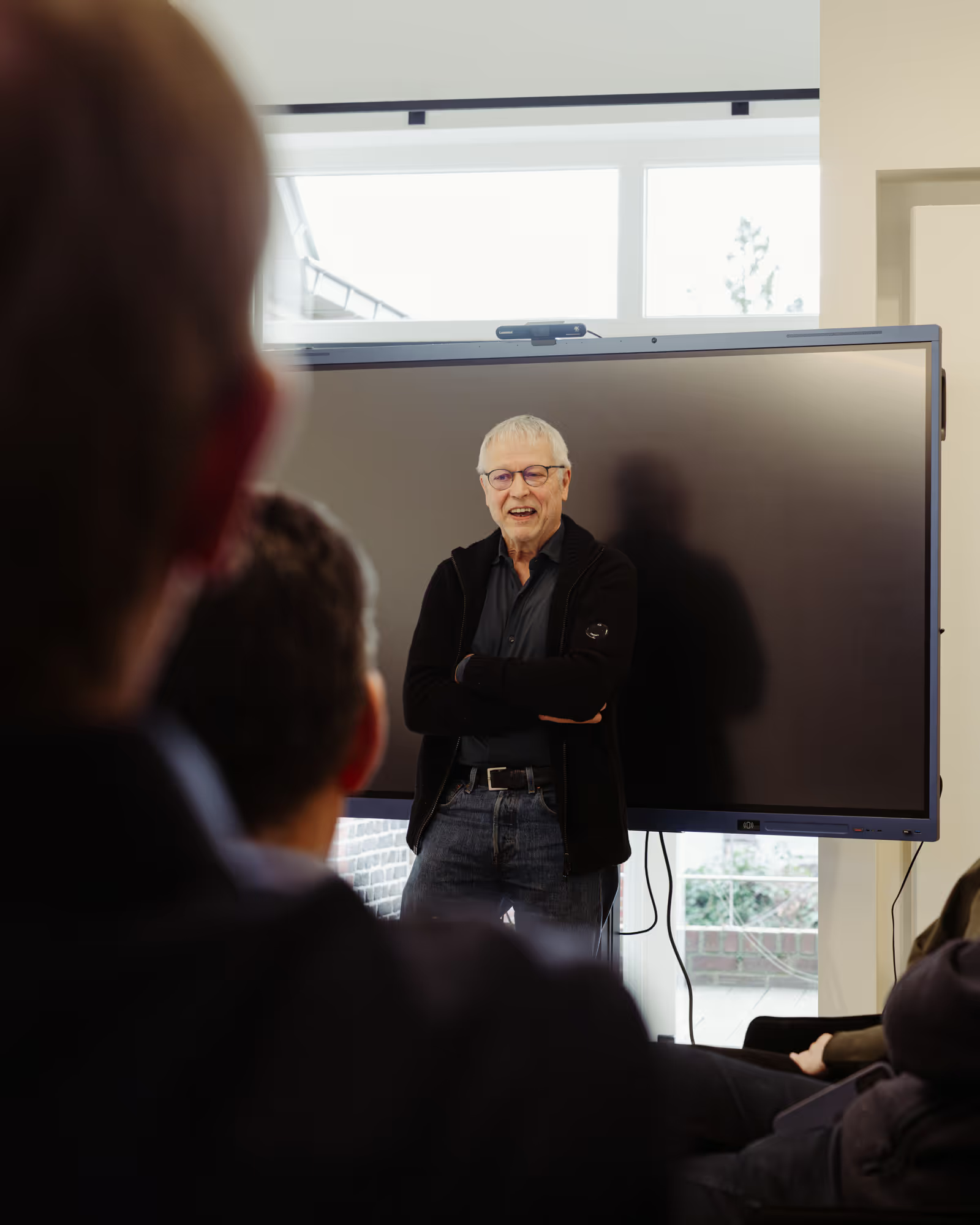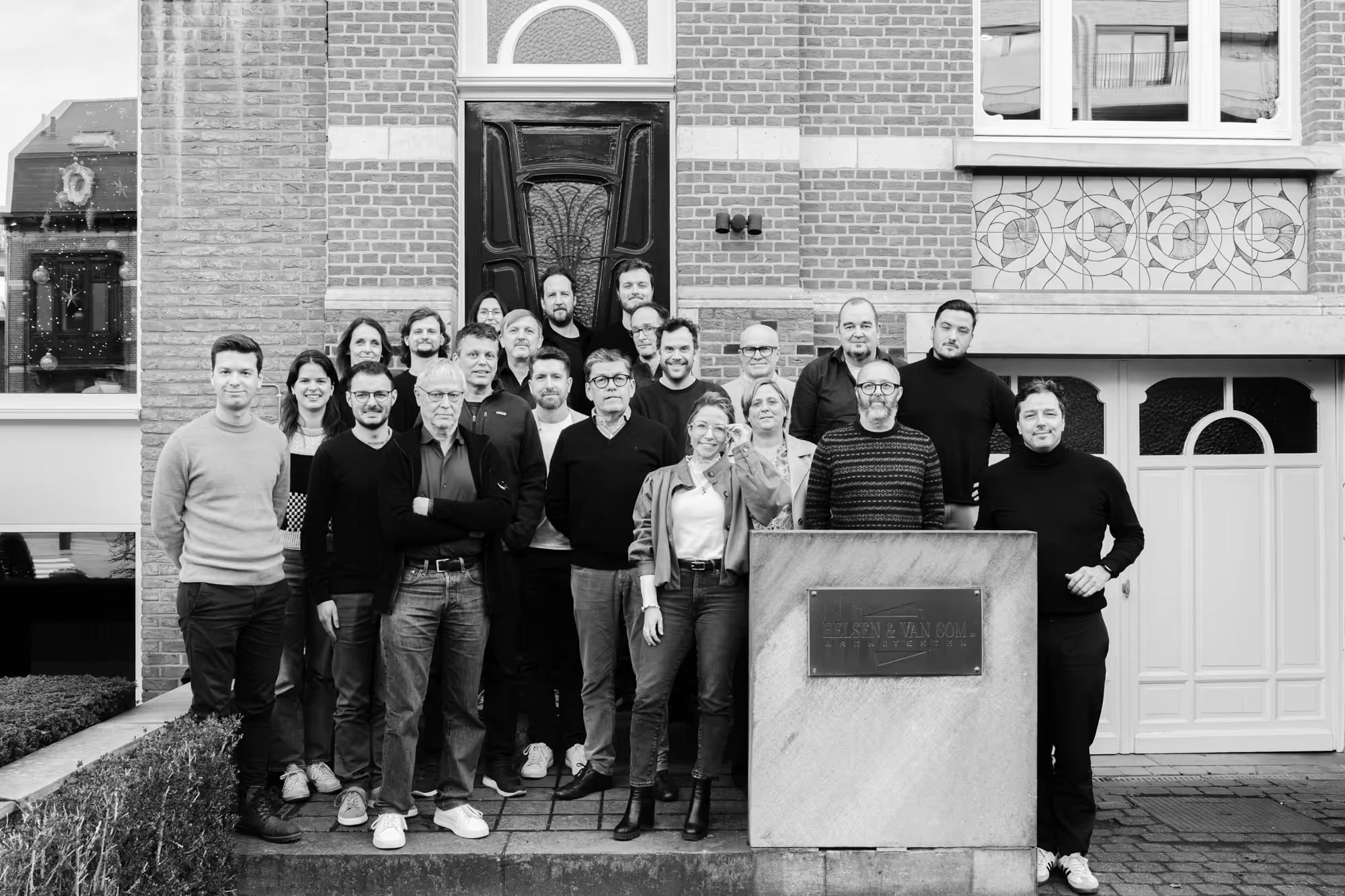

Rik Van Com and Rik Helsen, together with HVC Architects, built nearly half a century of a solid architectural practice that is now ready for an even stronger future. Their collaboration began in the late 1980s. In 2010, the two firms merged into a single CVBA. In 2016, Frank Tack joined as a partner, and in 2023, Frank Tack and Torsten Schoonaert took full control. Three years later, in 2026, a new chapter begins for HVC Architects.
But in the past, the two Riks provided the decisive assists—and scored many goals. We meet Rik and Rik on the Petite Boulevard in Hasselt, not far from the chic Quartier Bleu. Sitting opposite us are two driven, down-to-earth personalities, each with a different approach and lifestyle: a technically oriented profile versus the architectural designer. It is the common thread of a Limburg-Brabant success story, underpinned by a subtle professional tension that fueled creativity, innovation, and, now, continuity.
How did you meet?
Rik Van Com: “We met at the Hasselt Architecture School. Rik (Helsen) lived on the 11th floor of the dormitory, I was on the 10th. That already caused some mild confusion (smiles). After graduation, we kept in touch, which quickly led to collaboration. I had a small office in Valmeer near Riemst (later Hasselt), and Rik worked from Keerbergen. That immediately covered two very different regions. And it’s still like that today: we still have two offices.”
Rik Helsen: “When we graduated during the economically tough 1980s, work wasn’t easy to find. But gradually, we made it work. Our similarities made us friends; our differences kept it exciting and interesting. But we shared the same goal: to be strong together.”
What was your breakthrough?
Rik Van Com: “Our first major project was for a foreign company in Heist-op-den-Berg. They asked us to develop a low-cost alternative for a 2,000m² office and a 4,000m² hall. Had we known the cost of the initial design, we might have done it differently (laughs). It became our first industrial building—and that’s the path we’ve continued to follow. It put us on the map immediately.”
Rik Helsen: “At delivery, we had been graduated for barely five years. We dabbled in private homes briefly, but industrial construction quickly became our focus. We felt at home in that no-nonsense world, which resulted in beautiful projects. Many years later, we now build for SMEs, major investors, and property developers alike.”
What was the secret of your growth?
Rik Van Com: “As young architects, we were rookies. We had to find our own way. We quickly realized we had to innovate. Buying a fax machine in the late ’80s was a turning point. I still remember telling Rik, ‘You won’t believe what I just saw at a client—an entire design rolling out just like that!’ I couldn’t believe my eyes. The fax machine cost 120,000 Belgian francs at the time (€3,000), which was a lot of money. So, we went to the bank for a loan…”
Rik Helsen: “…But that strategy—adopting new trends—did drive growth. We saw things more broadly and quickly than some of our colleagues. I remember my first computer, a Commodore PET. If you’re designing a factory hall, you had to keep up. Industrial builders worked with AutoCAD and needed plans fast. That was only possible with a computer. We also realized that building and commercial projects were becoming more complex, and you needed to pool expertise—think endless regulations. We found our way through that complexity.”
Rik Van Com: “Those regulations have only gotten more tangled. They’re a real hurdle for architects, now and in the past. But we pushed through. Another factor was that the two offices kept developing their expertise. This was necessary, given the financial stakes of our projects. That certainly contributed to our growth.”
Is there an HVC approach?
Rik Helsen: “Yes: respect for budget, timing, and delivery, plus the fact that we have two offices with different focuses. This goes back to our education, where we each chose a different path: technical design versus architectural design. That difference drove our collaboration. Two ways of thinking that complement each other, though it required energy. Our successors, Frank and Torsten, have—after some initial hesitation—continued this structure in Hasselt and Keerbergen. The tension between technical design in Keerbergen and architectural design in Hasselt has been very positive for the business.”
Any advice for the next generation?
Rik Van Com: “Our firm is still here. The story isn’t over—we’re passing the baton. HVC Architects is ready for the next step. Frank, Torsten, and the team know exactly what they’re doing. Our handover is something you don’t see often. Are there big differences with the new generation? Yes—the next generation lives and works differently. I see it with my daughters—they approach things differently. We worked day and night; that’s just a fact. My tip: stay alert and don’t get ahead of yourself.”
Rik Helsen: “HVC is ready for the future. But indeed, keep your feet on the ground, and be responsible and conscientious. Our clients expect fast and accurate responses.”
Rik Van Com: “We are not star architects…”
Rik Helsen: “…That’s right. We’re not artists but craftsmen who wanted to deliver a solid product at a fair price. Clients didn’t come to us for a masterpiece—they came for a factory. In any case, we’ve worked together longer than we’ve been married. It was my profession and my passion, and it still is for both of us.”
— Philip De Hollogne